
Loading...
Serving Charleston, SC and surrounding areas. (843) 459-1691
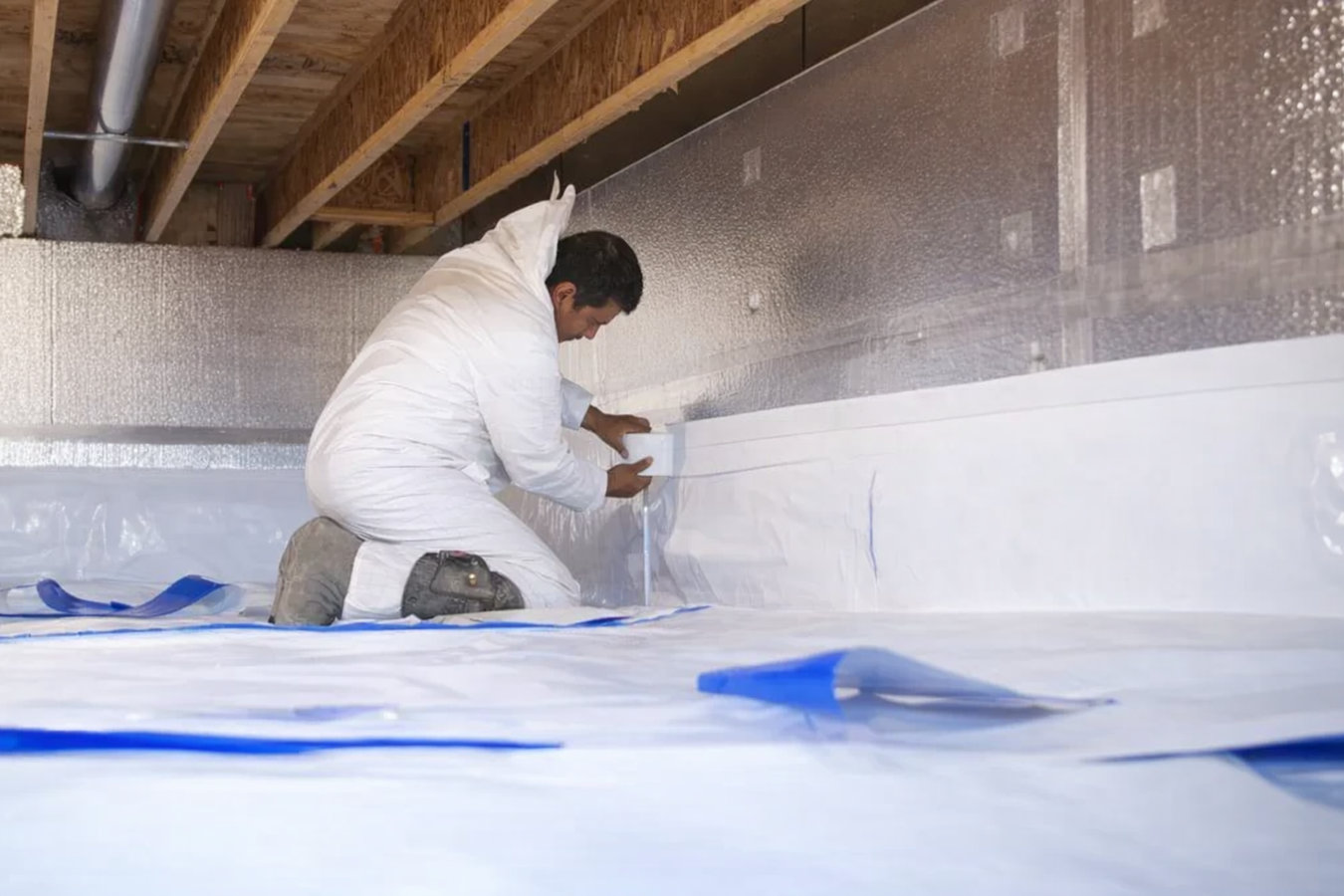
An unprotected crawl space lets ground moisture quietly damage your floors, insulation, and air quality. We install vapor barriers that hold up in Charleston's year-round humidity.
Vapor barrier installation in Charleston lays heavy-duty plastic sheeting across the bare dirt floor of your crawl space, overlapping every seam and running the material up the foundation walls to block ground moisture from rising into your home's structure - most jobs are completed in one full day, with larger or harder-to-access spaces sometimes taking two.
Think of it as a raincoat for the underside of your house. Without it, the soil beneath your home is actively releasing moisture into the air under your floors every day - and through the stack effect, that air moves up into the spaces where your family lives. The result is musty odors, softer floors over time, and an HVAC system working harder than it should. A properly installed barrier cuts that process off at the source. For homes where the crawl space is also losing heat, pairing the barrier with attic air sealing is a common next step that addresses both moisture and energy performance together.
If your Charleston home was built before the mid-1980s and you have never had crawl space work done, there is a real chance you have bare dirt under your floors right now. That bare dirt is releasing moisture into your home's framing every single day.
If certain spots on your floor give a little when you walk on them, or areas feel noticeably different from the rest, that is often a sign that the wood underneath has been absorbing moisture for a long time. In Charleston homes with crawl spaces, this is one of the most common early warning signs that ground moisture has been working its way up into the structure. It does not always mean major damage yet - but it does mean you should act soon.
A persistent musty smell in your home - particularly noticeable first thing in the morning or after Charleston's frequent summer rainstorms - is a strong signal that moisture is building up somewhere below your living space. Mold and mildew thrive in damp crawl spaces, and the air from that space moves up into your home through gaps in the floor. If the smell gets worse after wet weather, the crawl space is the first place to look.
If your Charleston home was built before the early 1990s and you have no record of a vapor barrier being installed, there is a good chance the crawl space has bare dirt or a very thin, degraded barrier that is no longer doing its job. Many older homes in neighborhoods like Avondale, Byrnes Downs, and across West Ashley were built without any ground moisture protection at all.
When moisture gets into your crawl space insulation, it makes that insulation far less effective at keeping your home comfortable. If your heating and cooling costs have been climbing and you have not changed your habits, a damp crawl space could be part of the reason. Charleston's long, hot summers mean your air conditioner is already working hard - a compromised crawl space makes it work even harder.
We install heavy-duty vapor barrier membranes that cover every square foot of exposed ground and run up your foundation walls - no bare dirt showing anywhere when the job is done. For homes where a basic barrier is not enough to manage the moisture load, we offer full crawl space encapsulation, which seals foundation vents, insulates the walls, and optionally adds a dehumidifier to actively manage the air in the space. We walk every homeowner through both options clearly so you can make an informed decision without feeling pushed. Our crawl space vapor barrier page goes deeper on what each approach involves and when each one makes sense for Charleston homes.
Before the new liner goes in, we remove any old, damaged material and clear out debris that would prevent a clean installation. We document the before and after with photos, and we leave you with a written record of exactly what was installed - including the material thickness - so you have documentation if you ever need it for a home sale or insurance claim.
Best for homes where the primary issue is ground moisture and the crawl space is otherwise structurally sound.
Suited for homes in flood-prone areas, older properties with vented crawl spaces, or homes with a history of standing water or recurring mold.
For homes where a thin or damaged barrier already exists and needs to come out before a proper installation can happen.
Combining a new vapor barrier with crawl space insulation in one project addresses both moisture and energy loss without scheduling two separate visits.
Charleston's average relative humidity stays above 70 percent for most of the year, which means crawl space moisture is not a seasonal problem here - it is a year-round one. Much of the city sits just a few feet above sea level, and the water table in many neighborhoods rises noticeably after heavy rain. For homeowners in low-lying areas near the Ashley and Cooper rivers, and in communities like Goose Creek, the ground under a home can stay saturated for days after a storm. The U.S. Department of Energy's guidance on moisture control identifies ground vapor as one of the most significant sources of crawl space moisture in humid climates - and recommends a ground cover as the primary line of defense.
A large share of Charleston's older housing stock - especially in neighborhoods like Avondale, Byrnes Downs, and across Mount Pleasant - was built before crawl space moisture protection was standard practice. Many of these homes have bare dirt or original plastic sheeting that has long since degraded. South Carolina's residential building code requires ground cover in crawl spaces to control moisture, and a properly installed barrier meets that standard - which matters when it comes time to sell or refinance your home. Hurricane season adds urgency: a sealed barrier with proper wall coverage recovers far better from storm water intrusion than bare ground.
We ask about the age of your home, any signs of moisture you have noticed, and whether you have had any crawl space work done before. We schedule a free on-site visit and respond within 1 business day. No estimates over the phone - we need to see the space first.
We physically enter the crawl space to check the current condition - ground coverage, moisture levels, existing damage, and how accessible the area is. This visit takes 30 to 45 minutes, and we walk you through what we found before we leave.
You receive a written estimate that specifies what we found, what we recommend, and what material we will use - including the thickness. We explain the difference between a standard barrier and encapsulation so you can choose what fits your home and budget without pressure.
The crew works entirely in the crawl space, laying the barrier across the full ground surface, overlapping and taping every seam, and securing edges to the foundation walls. Most homes are done in one day. We photograph the finished work and walk you through it before we leave - no curing period needed, your home is ready to use immediately.
Free crawl space inspection and written estimate. No commitment required. Experienced local crews.
(843) 459-1691We install heavy-duty liner material that holds up in a climate where the barrier works year-round, not just seasonally. Thinner, cheaper material degrades faster in Charleston's humidity - a barrier that fails in five years is not a bargain. We tell you exactly what we are installing before the job starts, and we put it in writing.
You should never have to take a contractor's word for it that work was done correctly - especially work you cannot see yourself. We photograph the crawl space before and after installation and share those photos with you before we leave. That record also protects you at resale.
We have worked in crawl spaces across the Charleston metro - from tight pier-and-beam foundations on the peninsula to postwar ranches in West Ashley to newer construction on Johns Island. Older construction often holds surprises, and we factor that into the estimate rather than discovering it on installation day.
We follow installation guidelines aligned with Energy Star standards for crawl space moisture control - complete coverage, sealed seams, and wall attachment done correctly. These standards exist because shortcuts in this part of the job are where most vapor barriers fail.
Charleston's climate is hard on homes in ways that are easy to ignore until damage is already done. We have been doing this work long enough to know that the homeowners who act before they have a problem are always better off than the ones who wait until the floors are soft or the mold is visible.
Seal the attic while you protect the crawl space - addressing both ends of the stack effect for a more complete moisture and energy solution.
Learn MoreLearn more about how a crawl space vapor barrier works, what installation looks like, and how it compares to full encapsulation.
Learn MoreA free crawl space inspection takes less than an hour and gives you a clear answer. Charleston's humidity works on your home every day - call us or get an estimate online and we will come take a look.