
Loading...
Serving Charleston, SC and surrounding areas. (843) 459-1691
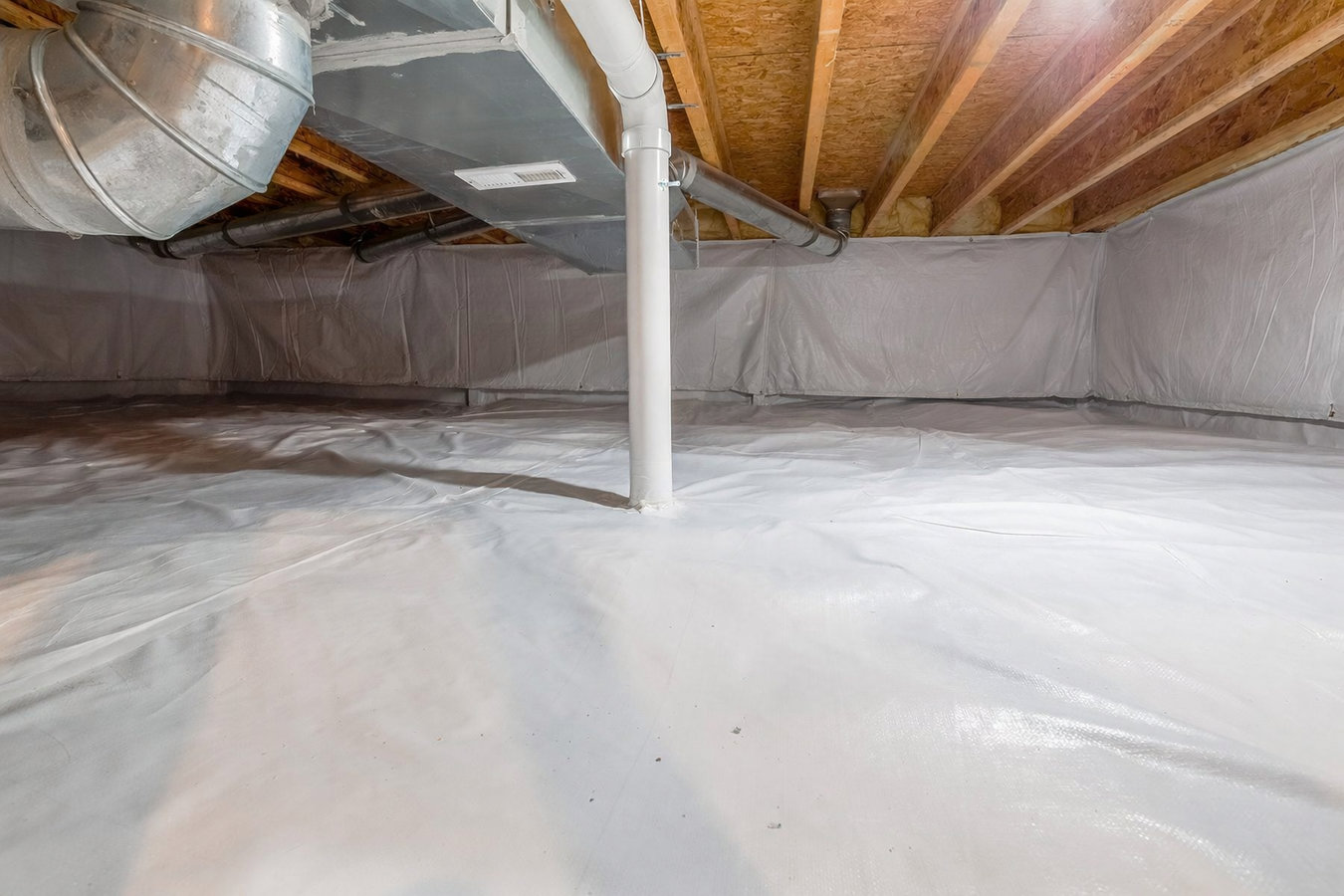
Ground moisture rising through your crawl space causes musty smells, soft floors, and higher cooling bills. We seal it out so your home stays dry and comfortable year-round.
Crawl space vapor barrier installation in Charleston lays a thick plastic liner across the bare ground beneath your home to block soil moisture from rising into your floor joists and living space - most residential jobs are completed in one day, with larger or more complex spaces taking two.
In the Lowcountry, the ground never fully dries out. Even on a clear day, moisture is moving upward through the soil and into the air under your home through a process called the stack effect - warm air rises, pulling crawl space air with it into your living areas. That means mold spores, humidity, and musty odors end up where your family breathes. A properly installed vapor barrier cuts off that process at the source. It works hand in hand with crawl space insulation, which addresses the thermal side of the problem while the barrier handles the moisture.
Homes built before the 1990s in West Ashley, James Island, and across the Charleston peninsula were often constructed without any ground moisture protection. If yours is one of them, the crawl space is likely working against your comfort every day.
If you notice a damp, earthy odor in your home that gets stronger during Charleston's hot, humid months from May through September, your crawl space is likely the source. That smell is moisture - and sometimes mold - rising from the ground below your floors. It is one of the most common signs that the crawl space needs attention, and it does not go away on its own.
Walk slowly across your floors and pay attention to spots that flex slightly under your weight or feel softer than the surrounding area. This can be a sign that the wood floor joists underneath have absorbed enough moisture to begin weakening. In Charleston's climate, this kind of damage can develop faster than homeowners expect, especially in older homes where no barrier has ever been installed.
If you see moisture beading on the inside of windows, on pipes in a lower floor, or on the underside of your floors when you look into the crawl space, humidity levels in your home are too high. In Charleston, this is often driven by moisture coming up from the crawl space rather than from outside air. A vapor barrier addresses the problem where it starts.
After a heavy rainstorm - which Charleston sees regularly during summer thunderstorm season and hurricane season - check your crawl space with a flashlight. If you see standing water, puddles, or soil that looks dark and saturated, moisture is actively entering the space. Even if the water dries between storms, repeated wet-dry cycles accelerate wood rot and mold growth beneath your floors.
We install heavy-duty plastic vapor barriers - typically 10 to 20 mils thick - that cover every inch of exposed ground surface and run up the foundation walls so moisture cannot sneak in around the edges. Every seam is overlapped by at least a foot and taped sealed, which is the step most shortcuts skip. For homes that need a more complete solution, we also offer full crawl space encapsulation, which seals the vents and adds insulation to the walls to give you tighter control over the space. A full vapor barrier installation walkthrough covers the differences between these approaches so you can choose what fits your home and budget.
Before any new liner goes down, we clear out debris and remove old damaged plastic that is no longer doing its job. We document everything with photos so you know exactly what was found and what was installed. For homes where moisture has already caused damage to the insulation above the crawl space, we coordinate that repair in the same visit - you should not need two separate contractors for what is essentially one connected problem.
Best for homes where ground moisture is the primary issue and the crawl space structure is otherwise in good shape.
Suited for homes in low-lying areas, older properties with vented crawl spaces, or homes that have had recurring moisture or mold issues.
For spaces with old, damaged plastic, standing debris, or prior moisture damage that needs clearing before a new liner can go in properly.
Combining a vapor barrier with insulation above it is a common approach for homes where both moisture and energy efficiency need to be addressed at the same time.
Charleston consistently ranks among the most humid cities in the United States. Average relative humidity stays above 70 percent for most of the year, which means the ground under your home is releasing moisture upward every single day - not just after rain. Much of the Charleston metro also sits at or near sea level, with a water table in many neighborhoods that rises noticeably after storms. Homeowners in James Island and other low-lying areas can see crawl space moisture levels spike dramatically after summer storms, making a well-sealed barrier essential rather than optional. The EPA's guidance on indoor air quality identifies crawl space moisture as one of the most direct contributors to unhealthy air inside homes.
A large share of Charleston's housing stock - including many homes in West Ashley and across North Charleston - was built before modern moisture-control practices became standard. Homes with vented crawl spaces from that era are now understood to make moisture problems worse in coastal climates, not better. Hurricane season adds another layer of risk: even storms that do not make direct landfall can push several inches of rain under a home in hours. Proper wall coverage and sealed seams are what separate a barrier that recovers from a storm from one that fails.
We ask a few basic questions - home size, any signs of moisture, whether there is anything currently in the crawl space - and schedule a time to come out. We respond within 1 business day and never quote a vapor barrier job over the phone without seeing the space first.
We physically enter your crawl space to check the current condition - size, moisture levels, existing damage, and how accessible the area is. This visit takes 30 to 60 minutes, and we walk you through exactly what we found before we leave.
You receive a written scope of work that specifies what thickness of plastic we are using and how we handle seams and wall attachment. No pressure to decide on the spot - take your time and compare quotes if you want to.
The crew clears the space, lays the liner across the full ground surface, overlaps and tapes every seam, and secures the edges to the foundation walls. Most Charleston homes are done in one day. Before we leave, we take photos and walk you through the finished work.
Free crawl space assessment. Written quote before any work starts. Experienced local crews.
(843) 459-1691We have worked in crawl spaces throughout the Charleston metro - including older pier-and-beam homes on the peninsula, postwar brick ranches in West Ashley, and flood-zone properties near the coast. That experience means we know what conditions to expect before we ever open the access hatch.
We use plastic that is at least 10 to 20 mils thick - the kind that holds up under foot traffic and in a climate that puts barriers under constant pressure year-round. Every seam is overlapped and taped. Every edge is secured to the foundation wall. That is where most installations cut corners, and it is where most failures start.
You should never have to wonder whether the work under your home was done properly. We photograph the finished installation and walk you through what we found and what we installed before we leave - so you have a clear record you can refer to later or hand to a home inspector.
We have handled moisture-control work in crawl spaces across the Lowcountry, from older peninsula homes to low-lying neighborhoods that flood. Every job starts with a free written estimate and ends with a clear record of what was installed, giving you a path to recourse if anything is ever not right.
Crawl space work is one of those jobs where the difference between a contractor who knows this climate and one who does not shows up in how long the installation lasts. We have been doing this in Charleston long enough to know what shortcuts look like - and why they cost more to fix than they save upfront.
Full vapor barrier installation details - materials, process, and how we handle encapsulation versus a standard barrier.
Learn MorePair a vapor barrier with proper crawl space insulation to address both moisture and heat loss in one coordinated project.
Learn MoreThe longer a crawl space goes without a barrier in this climate, the more damage moisture does to your floors and framing. Call us or request a free estimate and we will come take a look.